What is eVTOL?
The Physics of Future Flight
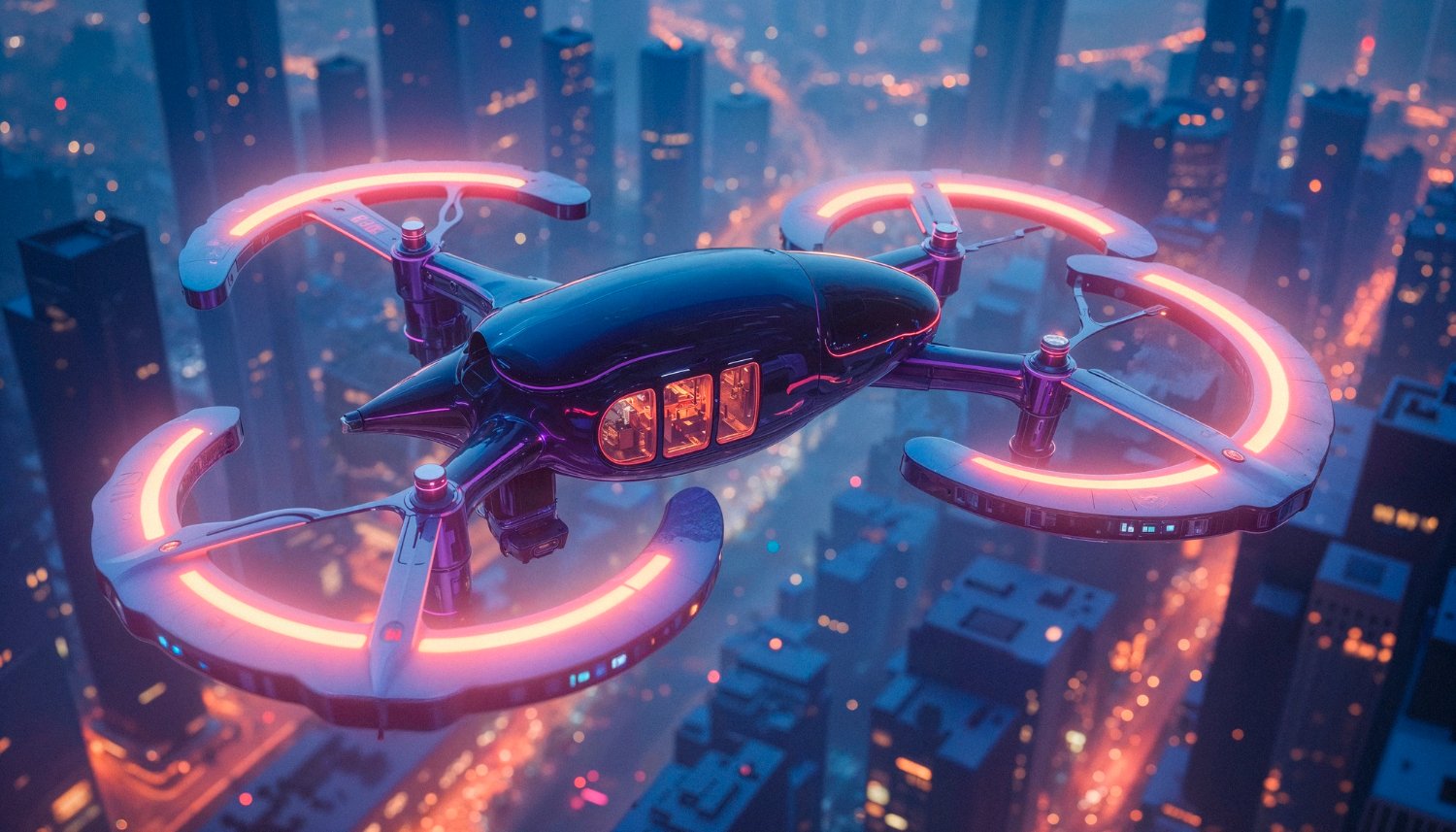
Imagine a vehicle that takes off like a helicopter, flies like an airplane, is as quiet as a dishwasher, and costs the same as an Uber Black. This is not science fiction—this is eVTOL.
We are currently witnessing the most significant disruption in aerospace since the jet engine. Electric Vertical Takeoff and Landing (eVTOL) aircraft are poised to unlock the skies above our congested cities, transforming a 2-hour gridlock commute into a serene 15-minute flight. But what exactly makes this technology possible now, after decades of flying cars being “just around the corner”?
1. The Definition: What Actually is an eVTOL?
At its core, an eVTOL is an aircraft that uses electric power to hover, take off, and land vertically. However, distinguishing it from a helicopter is crucial. The magic lies in the acronym itself:
Electric (e)
Powered by batteries (usually Lithium-Ion or Solid State), eliminating tailpipe emissions and complex combustion engines.
VTOL
Vertical Takeoff and Landing capabilities allow it to operate without runways, utilizing rooftops and parking garages.
2. The “Why Now?” Convergence
Why didn’t we have these 20 years ago? The feasibility of eVTOL relies on the convergence of three specific technologies that have only recently matured:
-
1. Energy Density (>250 Wh/kg) Batteries finally pack enough punch to lift a heavy airframe vertically. The automotive EV revolution paved the way for this.
-
2. Distributed Electric Propulsion (DEP) Instead of one big engine, we use many small motors. This is only possible because electric motors scale down beautifully without losing efficiency.
-
3. Fly-by-Wire Flight Control Computers adjust motor speeds thousands of times per second to stabilize the craft, making it impossible for a human to crash due to simple handling errors.
The Efficiency Leap
| Feature | Helicopter | Electric Car | eVTOL |
|---|---|---|---|
| Noise Level | Deafening (100db+) | Silent | Quiet Hum (65db) |
| Speed | 130-160 mph | 60-80 mph (Avg) | 200+ mph |
| Op Cost / Mile | $9.00+ | $0.60 | $3.00 (Target) |
| Maintenance | Extremely High | Low | Very Low |
3. How It Works: The Magic of DEP
Distributed Electric Propulsion (DEP) is the secret sauce. In a helicopter, you have a “Single Point of Failure”—the main rotor. If it breaks, gravity wins immediately.
In an eVTOL like the Joby S4 or Archer Midnight, there are typically 6 to 12 electric motors.
“Redundancy is not an option; it is the design philosophy. You can lose a motor, a battery pack, or a flight computer, and the aircraft simply adjusts the remaining systems to hover safely.”
The Transition Phase
Most eVTOLs are “Lift + Cruise” or “Tilt-Rotor” designs.
- Vertical Lift: Rotors spin horizontally to lift the craft like a drone.
- Transition: As the craft gains altitude, the rotors tilt forward (or separate pusher props engage).
- Wing Borne Flight: The aircraft speeds up, and lift is generated by the wings, not the rotors. This is where efficiency skyrockets—it uses 90% less energy than hovering.
4. Infrastructure: The Vertiport Web
We cannot simply land these on random street corners. The ecosystem requires Vertiports. These are modernized helipads equipped with:


5. The Roadmap to 2035
The industry is currently in the “Crawl” phase of a “Crawl, Walk, Run” strategy.
- 2025-2026 (Launch): Commercial certifications (FAA/EASA). Limited routes (e.g., JFK to Manhattan, Dubai Airport to Palm Jumeirah). Prices comparable to Uber Black. Pilot on board.
- 2028-2030 (Expansion): Higher density batteries allow for regional flights (e.g., Bengaluru to Mysore). Production scales up, costs drop to taxi levels.
- 2035+ (Autonomy): The pilot is removed. Capacity increases from 4 to 5 passengers. AI manages air traffic. Flight becomes cheaper than owning a car.
Conclusion: The Third Dimension
We have spent a century building roads, tunneling subways, and widening highways, yet traffic only gets worse. eVTOL technology offers the only scalable solution: utilizing the vast, empty 3D space above our cities. It is clean, it is quiet, and it is finally here.